



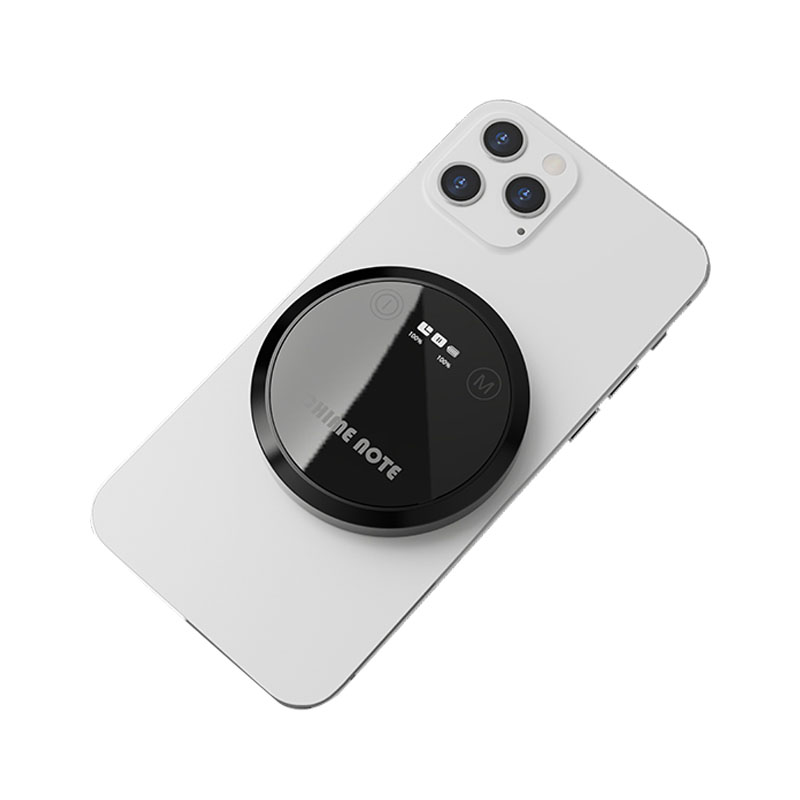


How can the internal acoustic structure of a recording device's privacy guard cover be optimized to reduce echo interference and maintain privacy?
Release Time : 2026-01-15
For privacy guard covers used in recording equipment, optimizing the internal acoustic structure to reduce echo interference is crucial for ensuring proper operation and preventing sound leakage to protect privacy. Echoes occur when sound reflects multiple times within the protective enclosure before returning to the recording device, where it overlaps with the original sound. This not only affects recording quality but can also lead to confusion and leakage of private information. Therefore, careful design and optimization of the internal acoustic structure are necessary from multiple perspectives.
First, a well-planned internal spatial layout is fundamental to reducing echo interference. When designing the enclosure, the location of the recording equipment and the sound propagation path must be fully considered. The recording equipment should be placed in a suitable location, avoiding areas of concentrated sound reflection. Simultaneously, cleverly designed internal partitions or protrusions can alter the direction of sound propagation, maximizing sound absorption or scattering during propagation rather than direct reflection back to the recording device. For example, irregularly shaped partitions can be placed inside the enclosure to disrupt sound reflection patterns and reduce echo formation.
Second, selecting materials with excellent sound absorption properties is key to optimizing the internal acoustic structure. The inner surface of the privacy guard cover for recording equipment is covered with one or more layers of sound-absorbing material, such as sound-absorbing cotton or sound-absorbing panels. These materials have a porous structure; when sound enters the material, it is constantly reflected and rubbed within the pores, converting sound energy into heat energy, thus achieving a sound absorption effect. Sound-absorbing materials of different thicknesses and densities have varying absorption effects on different frequencies of sound. Therefore, a suitable combination of sound-absorbing materials can be selected based on the operating frequency range of the recording equipment to achieve the best sound absorption effect and effectively reduce echo interference.
Furthermore, special treatment of the inner surface of the protective cover can also reduce echoes. In addition to using sound-absorbing materials, the hard surfaces inside the protective cover can be roughened. A rough surface increases the sound reflection angle, making the sound more dispersed during reflection and reducing the concentrated sound energy reflected back to the recording equipment. For example, sandblasting or wire drawing processes can be used to treat the inner surface of metal protective covers, or a frosted finish can be applied to plastic surfaces. These methods can effectively improve the acoustic properties of the surface and reduce echo interference.
Furthermore, a well-designed ventilation structure for the protective cover is also crucial. Recording equipment generates heat during operation, requiring good ventilation for heat dissipation. However, improperly designed vents can become sound propagation channels, increasing echo interference. Therefore, when designing the ventilation structure, special ventilation designs such as labyrinthine or honeycomb structures should be employed to ensure effective ventilation while preventing direct sound propagation. These special ventilation structures cause sound to undergo multiple reflections and refractions as it passes through, dissipating sound energy and reducing the impact of echoes on the recording equipment.
Simultaneously, considering the symmetry of the sound reflection paths within the protective enclosure is also crucial. Significant symmetry in the sound reflection paths within the enclosure can lead to amplified echoes at certain frequencies, increasing the intensity of echo interference. Therefore, this should be avoided as much as possible during the design phase. By breaking the symmetry, the sound reflections within the enclosure become more complex and random, reducing echo concentration.
Finally, conducting actual acoustic testing and adjustments is a necessary step in optimizing the internal acoustic structure. After completing the design and fabrication of the recording equipment's privacy guard cover, it needs to be installed on the recording equipment for actual acoustic testing. Using professional acoustic testing equipment, the echo inside the protective enclosure is measured, and the internal acoustic structure is further adjusted and optimized based on the test results until a satisfactory effect of reducing echo interference is achieved.