




Is an AI voice recorder really just about "recording"?
Release Time : 2025-12-23
In the digital age of rapid information flow, sound, as an efficient and natural medium, is being re-endowed with intelligent value. Traditional recording devices can only passively record audio, while the new generation of AI voice recorders, by integrating artificial intelligence algorithms, high-performance microphone arrays, and edge computing capabilities, upgrades "recording" into a full-process intelligent service encompassing "understanding—organization—output." It is no longer a silent storage tool, but a meeting assistant, a learning partner, an interview editor, and even a bridge for barrier-free communication.
The core breakthrough of the AI voice recorder lies in its real-time speech recognition and semantic processing capabilities. The device has a built-in deep neural network model that can accurately transcribe speech streams into text locally or in the cloud, supporting multilingual, multi-dialect, and even professional terminology recognition. In noisy meeting rooms, through beamforming and adaptive noise reduction technology, it can focus on the speaker's voice source, suppressing background interference such as air conditioning and keyboard typing, ensuring a transcription accuracy rate of over 95%. Furthermore, AI can automatically distinguish different speakers and generate dialogue text with role tags, greatly simplifying post-processing.
Functionally, AI voice recorders have far surpassed the scope of basic recording. They can automatically extract meeting minutes, marking key decisions and to-do items; in classroom settings, they can simultaneously generate timestamped notes for easy review of key content; for journalists, the device can instantly structure interview content, extract core viewpoints, and shorten the writing cycle. Some high-end models also support keyword wake-up and voice command control (such as "start recording" and "save clip"), achieving true hands-free operation.
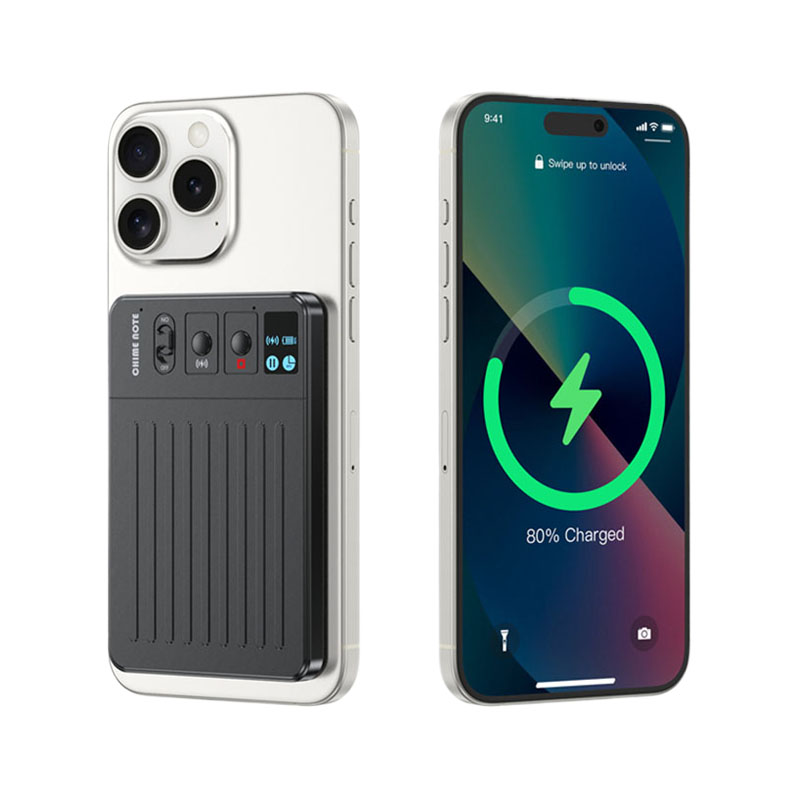
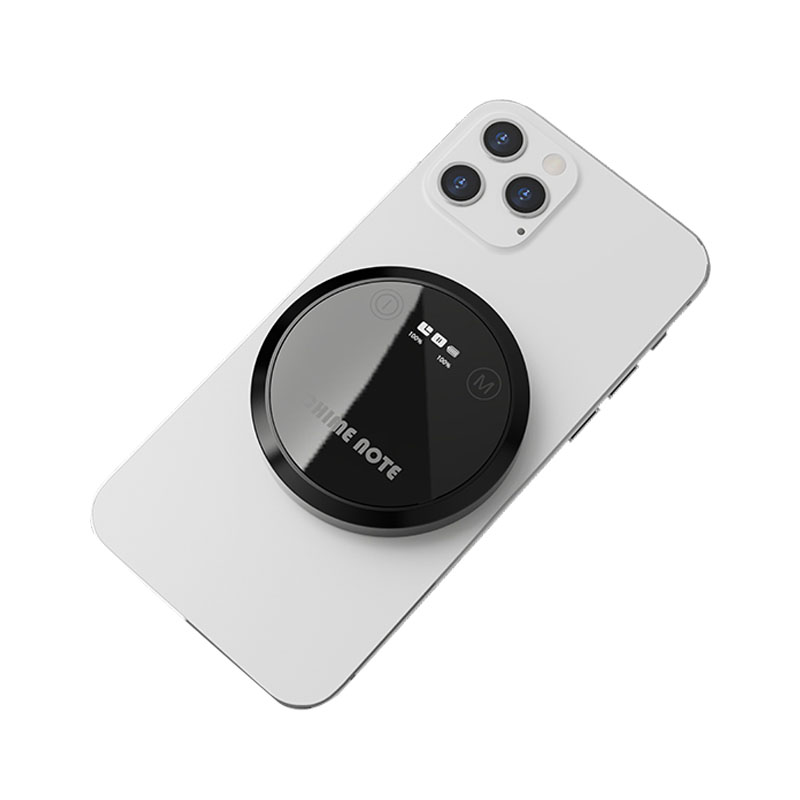
The hardware design also reflects a deep understanding of real-world scenarios. A high-sensitivity MEMS microphone array ensures 360° sound pickup without blind spots; a large-capacity battery supports continuous recording for over 10 hours; a Type-C interface and Wi-Fi/Bluetooth module enable fast export and multi-device synchronization. The compact and portable design allows it to be clipped to a collar, placed on a desk, or stored in a pocket, making it suitable for various demanding occasions such as business meetings, academic lectures, court hearings, and doctor-patient communication.
Data security and privacy protection are also highly valued. Sensitive content can be processed locally to avoid uploading to the cloud; audio files support AES-256 encrypted storage; some devices also provide a physical microphone switch to completely eliminate the risk of accidental recording. This balance between "intelligence" and "controllability" has led to its widespread application in highly compliant sectors such as government, finance, and healthcare.
A deeper significance lies in the fact that AI voice recorders are lowering the barriers to information access and expression. Visually impaired individuals can operate the device and listen to the transcription results via voice commands; language learners can repeatedly practice pronunciation by comparing it with the original text; and non-native speakers can overcome communication barriers with the help of real-time translation functions. Technology is no longer a cold, impersonal tool, but a social infrastructure that promotes inclusion and efficiency.
Ultimately, the value of AI voice recorders lies not in how much sound they record, but in how they make sound truly "heard, understood, and utilized." When a lengthy meeting is condensed into clear action items in minutes, when the key points of a lesson are automatically archived for later review, and when an interview is quickly transformed into an editable transcript—we see that artificial intelligence is subtly reshaping how humans process audio information. This small device is both an extension of the ears and an extension of the brain, preserving memorable sounds for everyone in a noisy world and giving them new life.
The core breakthrough of the AI voice recorder lies in its real-time speech recognition and semantic processing capabilities. The device has a built-in deep neural network model that can accurately transcribe speech streams into text locally or in the cloud, supporting multilingual, multi-dialect, and even professional terminology recognition. In noisy meeting rooms, through beamforming and adaptive noise reduction technology, it can focus on the speaker's voice source, suppressing background interference such as air conditioning and keyboard typing, ensuring a transcription accuracy rate of over 95%. Furthermore, AI can automatically distinguish different speakers and generate dialogue text with role tags, greatly simplifying post-processing.
Functionally, AI voice recorders have far surpassed the scope of basic recording. They can automatically extract meeting minutes, marking key decisions and to-do items; in classroom settings, they can simultaneously generate timestamped notes for easy review of key content; for journalists, the device can instantly structure interview content, extract core viewpoints, and shorten the writing cycle. Some high-end models also support keyword wake-up and voice command control (such as "start recording" and "save clip"), achieving true hands-free operation.
The hardware design also reflects a deep understanding of real-world scenarios. A high-sensitivity MEMS microphone array ensures 360° sound pickup without blind spots; a large-capacity battery supports continuous recording for over 10 hours; a Type-C interface and Wi-Fi/Bluetooth module enable fast export and multi-device synchronization. The compact and portable design allows it to be clipped to a collar, placed on a desk, or stored in a pocket, making it suitable for various demanding occasions such as business meetings, academic lectures, court hearings, and doctor-patient communication.
Data security and privacy protection are also highly valued. Sensitive content can be processed locally to avoid uploading to the cloud; audio files support AES-256 encrypted storage; some devices also provide a physical microphone switch to completely eliminate the risk of accidental recording. This balance between "intelligence" and "controllability" has led to its widespread application in highly compliant sectors such as government, finance, and healthcare.
A deeper significance lies in the fact that AI voice recorders are lowering the barriers to information access and expression. Visually impaired individuals can operate the device and listen to the transcription results via voice commands; language learners can repeatedly practice pronunciation by comparing it with the original text; and non-native speakers can overcome communication barriers with the help of real-time translation functions. Technology is no longer a cold, impersonal tool, but a social infrastructure that promotes inclusion and efficiency.
Ultimately, the value of AI voice recorders lies not in how much sound they record, but in how they make sound truly "heard, understood, and utilized." When a lengthy meeting is condensed into clear action items in minutes, when the key points of a lesson are automatically archived for later review, and when an interview is quickly transformed into an editable transcript—we see that artificial intelligence is subtly reshaping how humans process audio information. This small device is both an extension of the ears and an extension of the brain, preserving memorable sounds for everyone in a noisy world and giving them new life.