



Can AI voice recorders become silent partners for modern people's memory and efficiency through intelligent hearing?
Release Time : 2026-02-06
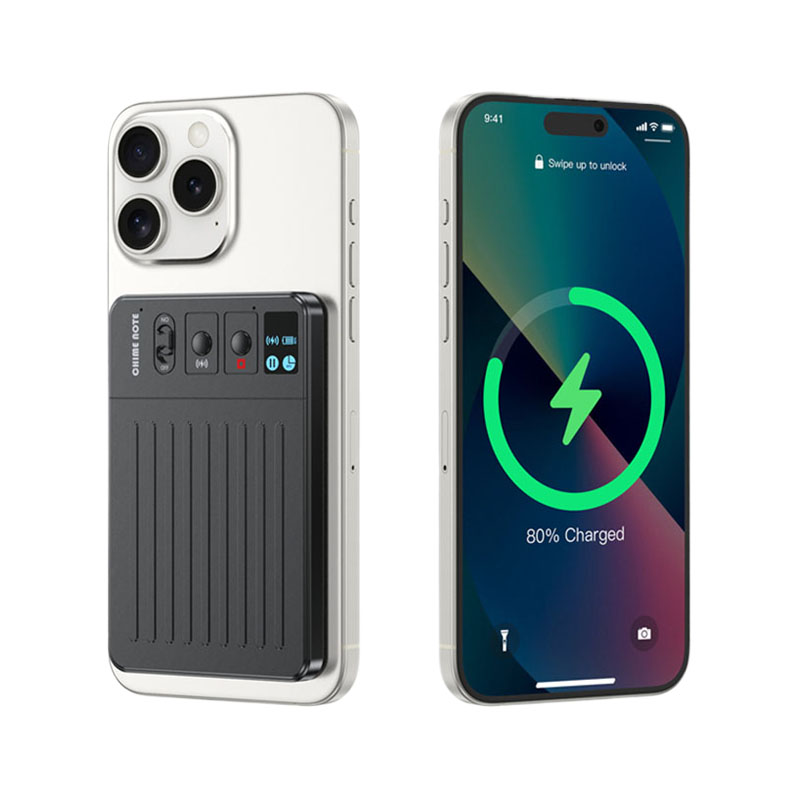
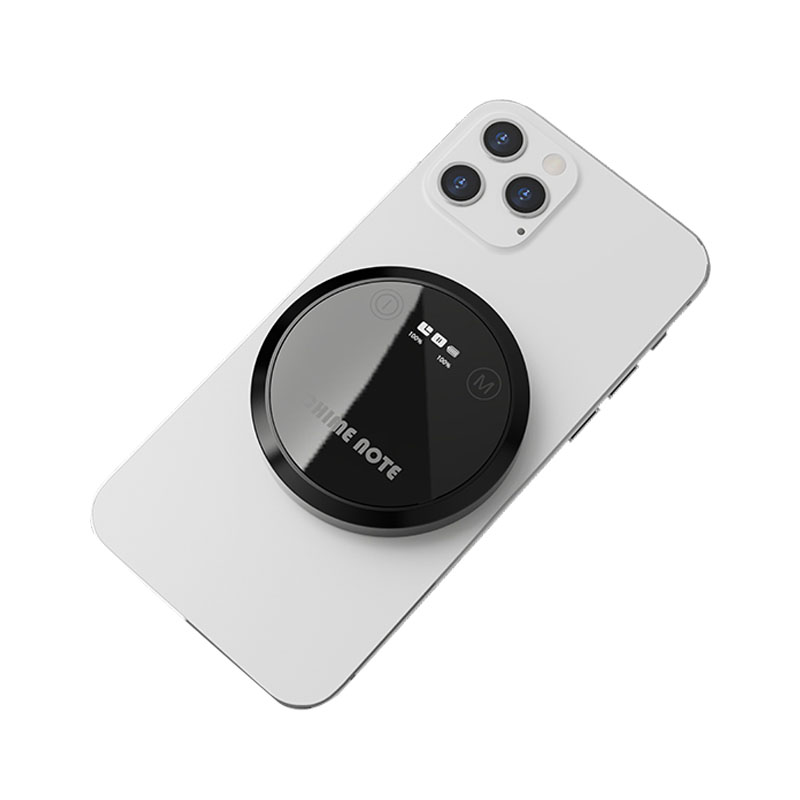
In this information-saturated age, sound carries the key points of meetings, flashes of inspiration, classroom lectures, interviews, and even everyday notes. However, the human brain has limited memory, and manual recording often lags behind the flow of thought. AI voice recorders—digital devices that integrate high-fidelity sound pickup, intelligent recognition, and semantic processing capabilities—are quietly playing the role of a "second brain" in meetings, learning, creation, and daily management, thanks to their ability to "hear clearly, remember accurately, and organize clearly." They don't interrupt conversations but silently capture every key piece of information in the background, transforming it into searchable, editable, and actionable digital assets.
Their core value lies first and foremost in their intelligent adaptability to different sound environments. Built-in multi-microphone arrays and noise reduction algorithms can focus the speaker's voice in noisy meeting rooms, filtering out air conditioner hum, keyboard clicks, or background conversations; in a quiet study, they can delicately reproduce soft whispers or the scratching of pens. Regardless of distance, whether it's a single person or a group, the device automatically optimizes gain and directionality to ensure clear and full recordings. This "environmentally adaptive" auditory sensitivity allows users to obtain professional-grade audio material without repeated adjustments.
Functionally, AI technology elevates raw sound into structured knowledge. During recording, the device simultaneously performs speech recognition and generates transcripts in real time. Afterward, through natural language processing technology, it automatically extracts keywords, divides topics into paragraphs, marks key sentences, and even identifies the speaker. Users can quickly jump to "budget discussion" or "project deadline" segments, saving hours of replay time. For students, classroom recordings instantly become notes; for journalists, interview content is immediately turned into articles; for creators, fragments of inspiration are preserved intact.
A deeper significance lies in liberating time and attention. When people are no longer anxious about "whether they have recorded everything," they can fully immerse themselves in the present communication—focused listening, deep thinking, and immediate responses. The AI voice recorder assumes the role of a "faithful recorder," freeing people from mechanical copying and allowing them to return to the essence of communication. In today's increasingly collaborative world, it can synchronize recordings and text to the cloud, allowing team members to access them anytime, breaking down time and space limitations and improving collaboration efficiency.
Furthermore, privacy and security features ensure peace of mind. High-end devices support local processing, eliminating the need to upload sensitive content to the cloud; recorded files can be encrypted and access permissions can be set; some models even feature a physical microphone switch, completely eliminating the risk of accidental recording. This respect for data sovereignty makes it suitable for highly confidential scenarios such as legal consultations and medical consultations.
Ultimately, the value of an AI voice recorder lies not in how many hours of audio it stores, but in how it transforms fleeting sounds into traceable and reusable intellectual assets. When you replay daytime inspirations late at night, or generate meeting minutes with a single click—behind this lies artificial intelligence silently weaving a web of memory, supporting efficiency and creativity. Because in the cognitive logic of the digital age, true intelligence is not about replacing human memory, but about extending the boundaries of our perception—silent as a recorder, yet resonating within itself.
Their core value lies first and foremost in their intelligent adaptability to different sound environments. Built-in multi-microphone arrays and noise reduction algorithms can focus the speaker's voice in noisy meeting rooms, filtering out air conditioner hum, keyboard clicks, or background conversations; in a quiet study, they can delicately reproduce soft whispers or the scratching of pens. Regardless of distance, whether it's a single person or a group, the device automatically optimizes gain and directionality to ensure clear and full recordings. This "environmentally adaptive" auditory sensitivity allows users to obtain professional-grade audio material without repeated adjustments.
Functionally, AI technology elevates raw sound into structured knowledge. During recording, the device simultaneously performs speech recognition and generates transcripts in real time. Afterward, through natural language processing technology, it automatically extracts keywords, divides topics into paragraphs, marks key sentences, and even identifies the speaker. Users can quickly jump to "budget discussion" or "project deadline" segments, saving hours of replay time. For students, classroom recordings instantly become notes; for journalists, interview content is immediately turned into articles; for creators, fragments of inspiration are preserved intact.
A deeper significance lies in liberating time and attention. When people are no longer anxious about "whether they have recorded everything," they can fully immerse themselves in the present communication—focused listening, deep thinking, and immediate responses. The AI voice recorder assumes the role of a "faithful recorder," freeing people from mechanical copying and allowing them to return to the essence of communication. In today's increasingly collaborative world, it can synchronize recordings and text to the cloud, allowing team members to access them anytime, breaking down time and space limitations and improving collaboration efficiency.
Furthermore, privacy and security features ensure peace of mind. High-end devices support local processing, eliminating the need to upload sensitive content to the cloud; recorded files can be encrypted and access permissions can be set; some models even feature a physical microphone switch, completely eliminating the risk of accidental recording. This respect for data sovereignty makes it suitable for highly confidential scenarios such as legal consultations and medical consultations.
Ultimately, the value of an AI voice recorder lies not in how many hours of audio it stores, but in how it transforms fleeting sounds into traceable and reusable intellectual assets. When you replay daytime inspirations late at night, or generate meeting minutes with a single click—behind this lies artificial intelligence silently weaving a web of memory, supporting efficiency and creativity. Because in the cognitive logic of the digital age, true intelligence is not about replacing human memory, but about extending the boundaries of our perception—silent as a recorder, yet resonating within itself.