



Does the privacy protection shell maintain consistent privacy performance under different lighting conditions?
Release Time : 2026-02-19
With the increasing penetration of smart devices into daily life, people are paying more and more attention to personal privacy and security. Privacy protection shells, as innovative accessories that combine physical protection and privacy shielding, are being widely used in mobile phones, tablets, and even recording devices.
1. Optical principles determine basic privacy protection performance, but are affected by ambient light modulation.
Most privacy-protecting cases rely on micro-blind technology or directional light-transmitting films, allowing only a certain angle of view directly in front to be clearly visible; beyond that angle, the screen quickly dims or becomes black. This mechanism is highly effective under ideal laboratory lighting. However, in real environments, light intensity and incident direction significantly affect visual contrast. For example, under strong direct sunlight, ambient light may reflect from the side into the observer's eyes, weakening the "black screen" effect and allowing others to vaguely discern the screen outline; while in extremely dark environments, if the device screen brightness is low, the user's visibility from the front decreases, and although it is harder to see from the side, the "active shielding" effect is actually weakened. Therefore, the privacy protection effect is not absolutely constant, but rather dynamically coupled with the intensity, color temperature, and angle of incidence of ambient light.
2. All-Aluminum Alloy Body Enhances Environmental Adaptability and Stability
It's worth noting that this privacy protection shell is made entirely of aluminum alloy, which not only gives the product a lightweight yet robust physical property, but also indirectly plays a role in optical stability. The metal casing has excellent anti-reflective and diffuse reflection control capabilities. Compared to plastic or glass materials, it effectively reduces secondary reflections of external stray light on the casing surface, preventing the device's usage status from being revealed by casing reflections. At the same time, the good thermal conductivity of aluminum alloy helps dissipate heat from the device, preventing screen aging or brightness decay caused by prolonged high-brightness display—and brightness stability is one of the key factors in maintaining the privacy protection contrast. Furthermore, its rainproof, waterproof, and shockproof design ensures reliable use in variable outdoor weather conditions, indirectly guaranteeing the continued availability of the privacy protection function.
3. Sliding Cover + Disguise Mode: A Proactive Privacy Strategy Beyond Optical Privacy Screen Protectors
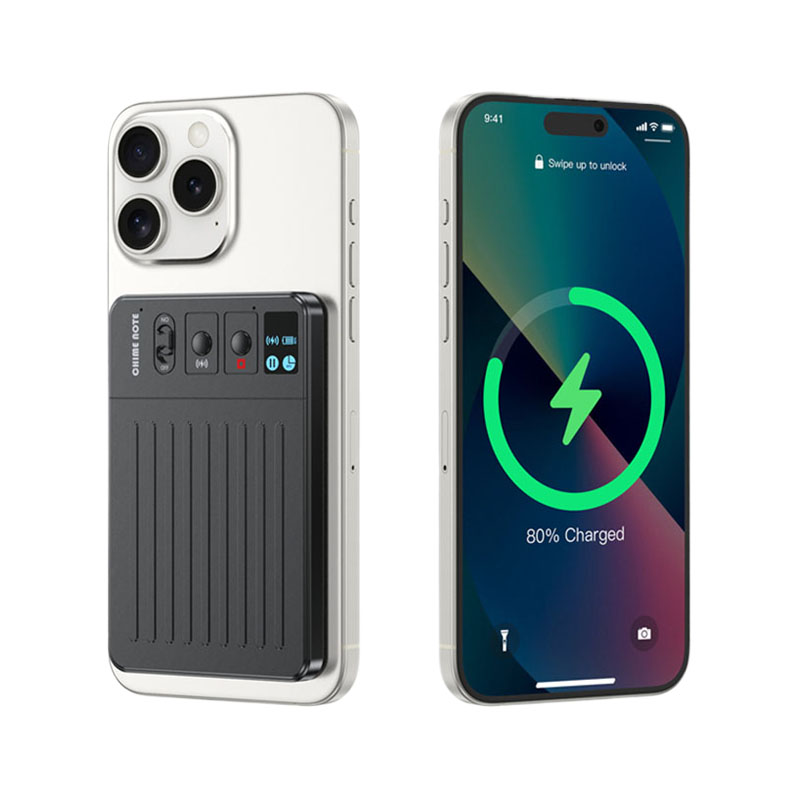
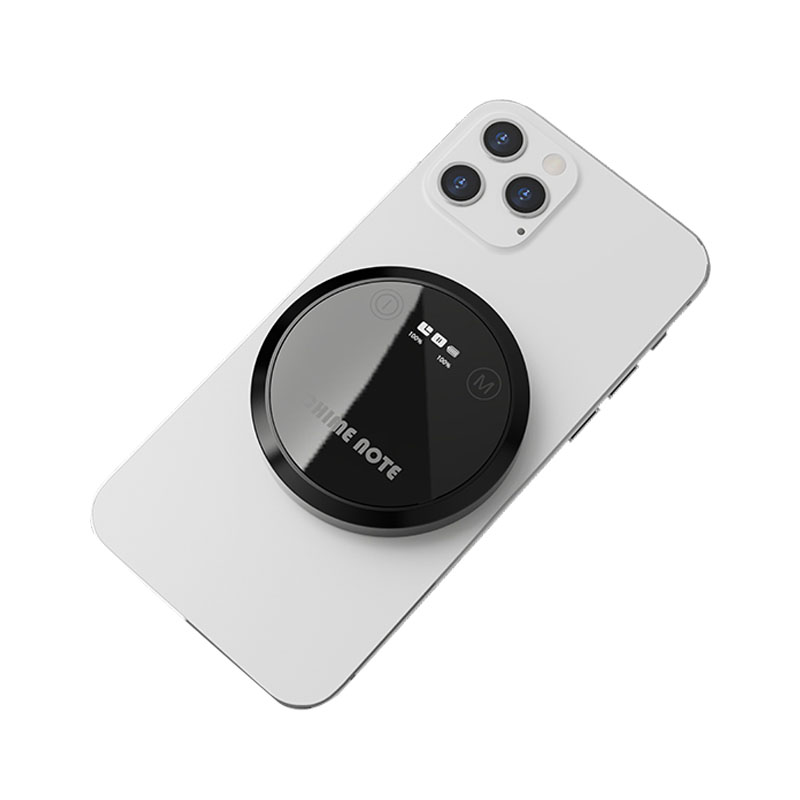
What truly sets this privacy protection shell apart is its "axisless sliding rail + sliding cover" design and its "instant power bank" disguise function. In highly sensitive environments, even under lighting conditions unfavorable to optical privacy screen protectors, simply sliding the cover physically shields the entire front of the device, completely blocking visual information leakage. Even more ingeniously, the device's appearance instantly mimics that of an ordinary power bank—an electronic accessory that blends seamlessly into public spaces. This "functional disguise" strategy completely bypasses the impact of light on privacy protection, achieving zero-risk privacy protection day or night, indoors or outdoors. It no longer relies on passive optical limitations but instead constructs a higher-dimensional privacy barrier through proactive form transformation.
4. Overall Performance: Light Influence Exists, but System Design Compensates
In summary, from the perspective of optical privacy screen protectors alone, the effectiveness of the privacy protection shell does indeed fluctuate under different lighting conditions. Strong sidelight may reduce the contrast of the shielding, while extremely dark environments weaken the user's perception. However, thanks to the all-metal structure's suppression of stray light, the physical shielding provided by the sliding cover, and the complete concealment of the device's identity by the camouflage mode, the entire system forms a three-layered privacy protection system: "optical + mechanical + behavioral." This allows it to ensure privacy and security in most real-world scenarios, even under less-than-ideal lighting conditions, through other mechanisms. In other words, while changes in lighting can affect the performance of a single privacy protection technology, the overall product design has proactively mitigated this weakness.
The true value of the privacy protection shell lies not only in the optical performance of its privacy film, but also in how it integrates materials, structure, and function to provide reliable, convenient, and seamless privacy protection in the complex and ever-changing real world. Whether in glaring sunlight or deep darkness, users can easily control their digital boundaries with a simple slide or form change—this is the wisdom and warmth that modern privacy technology should possess.
1. Optical principles determine basic privacy protection performance, but are affected by ambient light modulation.
Most privacy-protecting cases rely on micro-blind technology or directional light-transmitting films, allowing only a certain angle of view directly in front to be clearly visible; beyond that angle, the screen quickly dims or becomes black. This mechanism is highly effective under ideal laboratory lighting. However, in real environments, light intensity and incident direction significantly affect visual contrast. For example, under strong direct sunlight, ambient light may reflect from the side into the observer's eyes, weakening the "black screen" effect and allowing others to vaguely discern the screen outline; while in extremely dark environments, if the device screen brightness is low, the user's visibility from the front decreases, and although it is harder to see from the side, the "active shielding" effect is actually weakened. Therefore, the privacy protection effect is not absolutely constant, but rather dynamically coupled with the intensity, color temperature, and angle of incidence of ambient light.
2. All-Aluminum Alloy Body Enhances Environmental Adaptability and Stability
It's worth noting that this privacy protection shell is made entirely of aluminum alloy, which not only gives the product a lightweight yet robust physical property, but also indirectly plays a role in optical stability. The metal casing has excellent anti-reflective and diffuse reflection control capabilities. Compared to plastic or glass materials, it effectively reduces secondary reflections of external stray light on the casing surface, preventing the device's usage status from being revealed by casing reflections. At the same time, the good thermal conductivity of aluminum alloy helps dissipate heat from the device, preventing screen aging or brightness decay caused by prolonged high-brightness display—and brightness stability is one of the key factors in maintaining the privacy protection contrast. Furthermore, its rainproof, waterproof, and shockproof design ensures reliable use in variable outdoor weather conditions, indirectly guaranteeing the continued availability of the privacy protection function.
3. Sliding Cover + Disguise Mode: A Proactive Privacy Strategy Beyond Optical Privacy Screen Protectors
What truly sets this privacy protection shell apart is its "axisless sliding rail + sliding cover" design and its "instant power bank" disguise function. In highly sensitive environments, even under lighting conditions unfavorable to optical privacy screen protectors, simply sliding the cover physically shields the entire front of the device, completely blocking visual information leakage. Even more ingeniously, the device's appearance instantly mimics that of an ordinary power bank—an electronic accessory that blends seamlessly into public spaces. This "functional disguise" strategy completely bypasses the impact of light on privacy protection, achieving zero-risk privacy protection day or night, indoors or outdoors. It no longer relies on passive optical limitations but instead constructs a higher-dimensional privacy barrier through proactive form transformation.
4. Overall Performance: Light Influence Exists, but System Design Compensates
In summary, from the perspective of optical privacy screen protectors alone, the effectiveness of the privacy protection shell does indeed fluctuate under different lighting conditions. Strong sidelight may reduce the contrast of the shielding, while extremely dark environments weaken the user's perception. However, thanks to the all-metal structure's suppression of stray light, the physical shielding provided by the sliding cover, and the complete concealment of the device's identity by the camouflage mode, the entire system forms a three-layered privacy protection system: "optical + mechanical + behavioral." This allows it to ensure privacy and security in most real-world scenarios, even under less-than-ideal lighting conditions, through other mechanisms. In other words, while changes in lighting can affect the performance of a single privacy protection technology, the overall product design has proactively mitigated this weakness.
The true value of the privacy protection shell lies not only in the optical performance of its privacy film, but also in how it integrates materials, structure, and function to provide reliable, convenient, and seamless privacy protection in the complex and ever-changing real world. Whether in glaring sunlight or deep darkness, users can easily control their digital boundaries with a simple slide or form change—this is the wisdom and warmth that modern privacy technology should possess.